Experts call for effective negotiation strategies


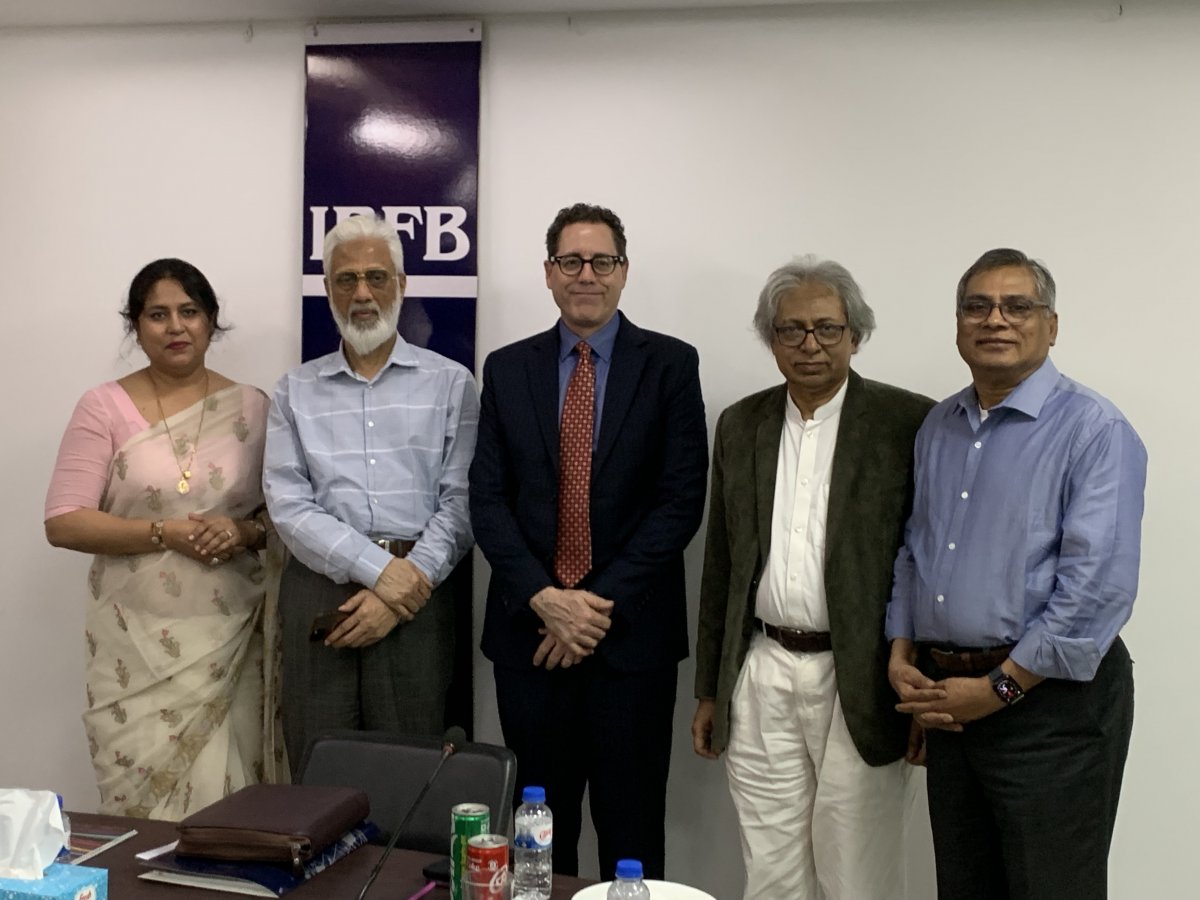
International Business Forum of Bangladesh (IBFB) organized a round
table discussion titled “Revamping USA-Bangladesh Trade” on Saturday at
the conference room, IBFB office, Tejgaon in the capital.
Dr. Anisuzzaman Chowdhury, Special Assistant, Finance Division, Ministry
of Finance, attend the roundtable as the Chief Guest while IBFB
President Lutfunnisa Saudia Khan chaired the session.
Addressing the session as the chief guest, Dr. Anisujjaman Chgowdhury
stressed need to have policy co-ordination, policy independence and to
find out effective way of negotiation to tackle the challenges in the
world trade.
He said the USA will administer the world trade so we have to create
strong lobby with US and we have to bring out a new traction to coup up
with the changed situation.
“International circumstances are now different, we have to build self
confidence and ultimately we have to bring diversification in our
economy. The government will form a specialized trade negotiation body
ahead of graduation”, Dr. Chowdhury added.
Dr. Zaidi Sattar, Chairman & CEO, Policy Research Institute of
Bangladesh (PRI) presented keynote paper on the occasion.
Professor Mustafizur Rahman, Distinguished Fellow, Centre for Policy
Dialogue (CPD), Syed Ershad Ahmed, President, American Chamber of
Commerce in Bangladesh, Dr. Mahfuz Kabir, Director, Research, Bangladesh
International institute of Strategy Studies (BIISS) as distinguished
speakers at this discussion.
Noted economist Dr. Sattar, in his keynote, mentioned as baseline tariff
currently there have flat 10% across all imports which is shocking.
He said the variable tariff rates applied to top 60 trading partners and
higher tariffs imposed on nations considered "Worst Trade Offenders". US
Tariff on China 30% & China Tariff on US is 10% while 25% for Canada and
Mexico.
Suggesting to go for negotiation strategy, he said engaging U.S. to
reduce tariffs on key U.S. export items like agri-products, machinery,
autos, he said focusing on low-revenue items (cotton, scrap metal
tariffs already near-zero), MFN basis and lower own tariffs on non-RMG
items (e.g. footwear) to reduce anti-export bias
He mentioned that the trade diversion could benefit Bangladesh due to
China’s tariff burden (54%) while there will be risk of global GDP
shrinking by 1%, trade by 3%; Asia particularly vulnerable
In terms of RMG sector actions, Dr. Zaidi Sattar suggested collaborate
with buyers to share increased costs mentioning that limited bargaining
power makes price adjustment critical.
Citing that the China and US are the two largest economies in the world,
he said that the US, at $26 Tr, commands a quarter of world GDP while
China is next, with $16 Tr. The two make up over 40% of world GDP. The
two are also the largest trading economies in the world; 33% of world
trade; China the largest exporter, US the largest importer.
Professor Mustafizur Rahman, Distinguished Fellow, CPD, suggested
stressed strengthening negotiating capacity, mentioning that we can sign
Free Trade Agreement (FTA) or Preferential Trade Agreement (PTA) with US
but it will not be so easy.
“US Tariff is called reciprocal but in fact it is irrational and
one-sided. We need to bring the tariff issue in the TICFA platform but
we are not still ready for that”, Mostafiz added.
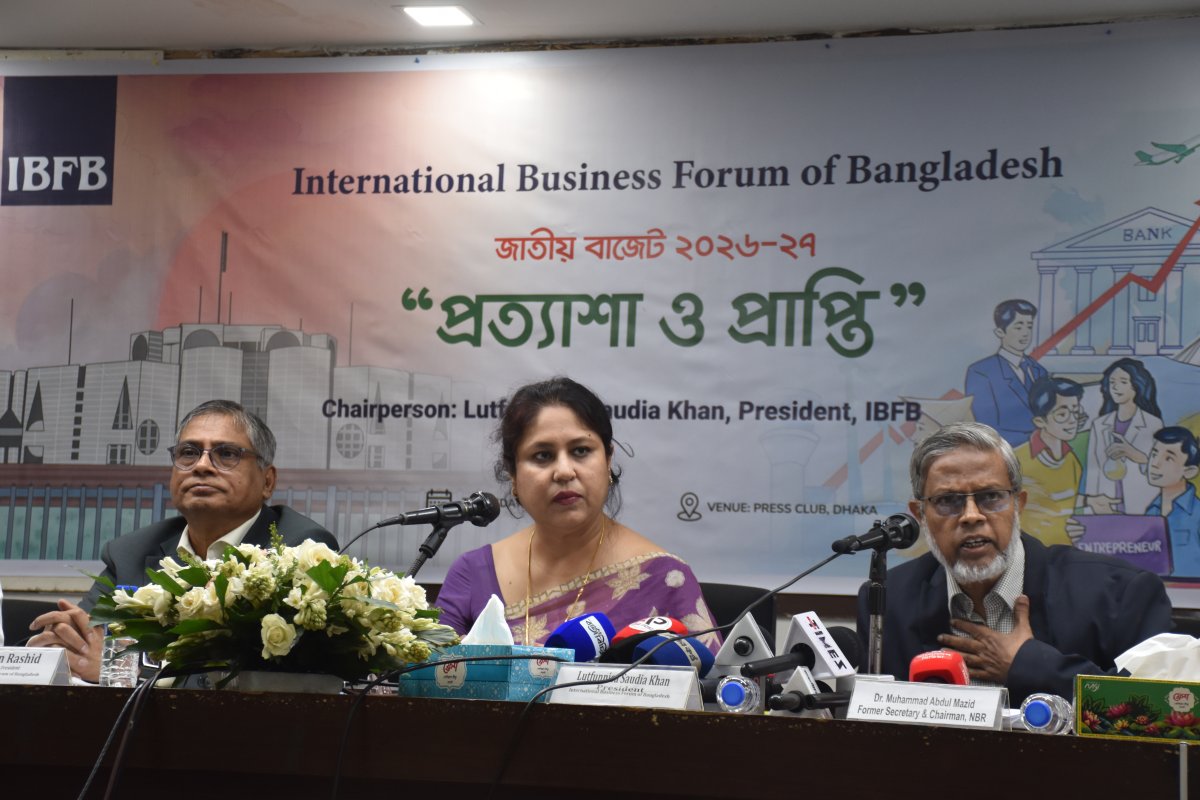
Addressing as the session chair, IBFB President Lutfunnisa Saudia Khan
said the USA is a major trade partner of Bangladesh, especially as a
leading market for our exports mainly in the Ready Made Garments (RMG)
sector.
She said the suspension of GSP benefits and the rise of protectionist
policies in recent years have impacted our competitiveness in key
sectors like garments, leather and light manufacturing-hurting export
performance, slowing job growth and affecting investor sentiment.
BIISS Research Director Dr Mahfuz Kabir said TICFA is the proper
platform to discuss the issue and begin negotiating process.
“I believe that signing agreements like IPF or FTA will not be effective
“, he added.
Chairman of the Governmental Relation and Advocacy Committee of IBFB,
M.S. Siddiqui moderated the roundtable discussion while representatives
from different chambers and trade bodies and business leaders
participated in the open discussion session.