Views Exchange Meeting with the Journalists/Civil Society
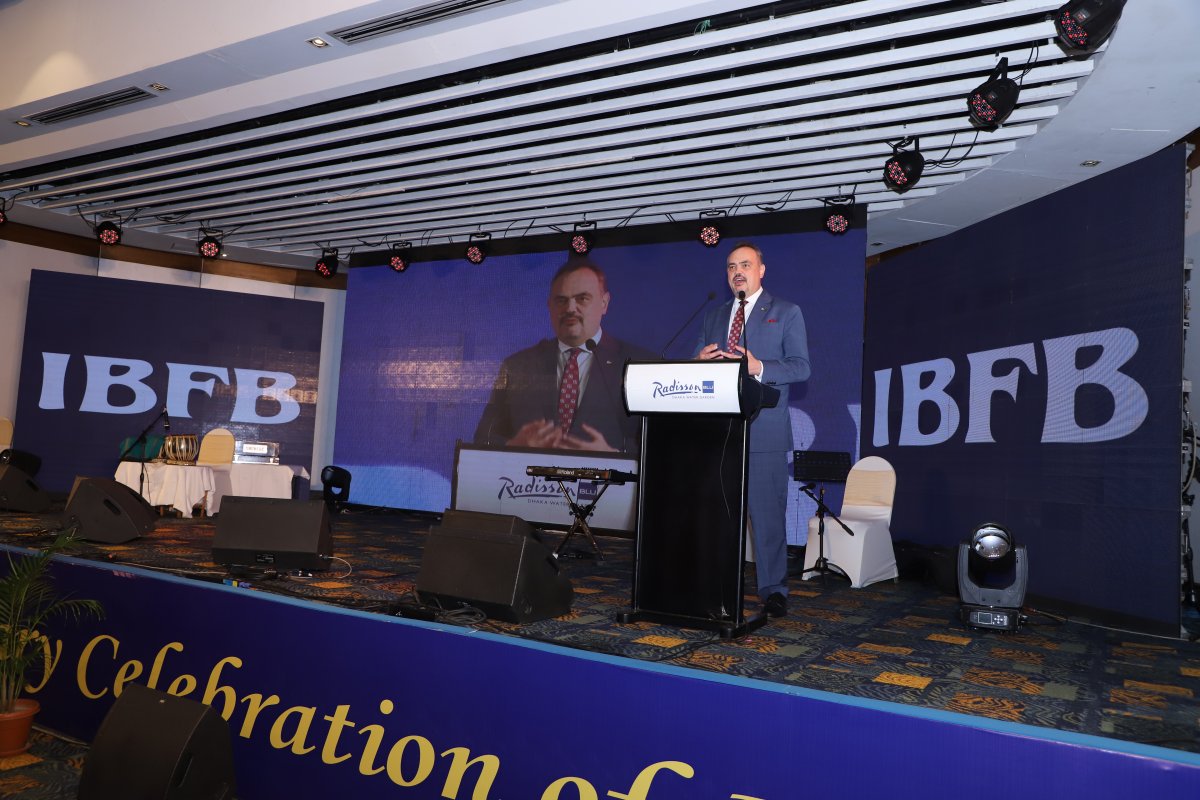
The Views Exchange Meeting with the Journalists/Civil Society on “Corruption in Accessing Industrial Credit: Improving Transparency of State-owned Commercial Banks” was held on 16 October 2010 at the VIP Lounge of the National Press Club, Dhaka.
The event was a sequence of activities and was aimed at appraising the research and advocacy initiatives of IBFB and receiving inputs and feedback from a cross section of journalists and Civil Society Members on the said topic.
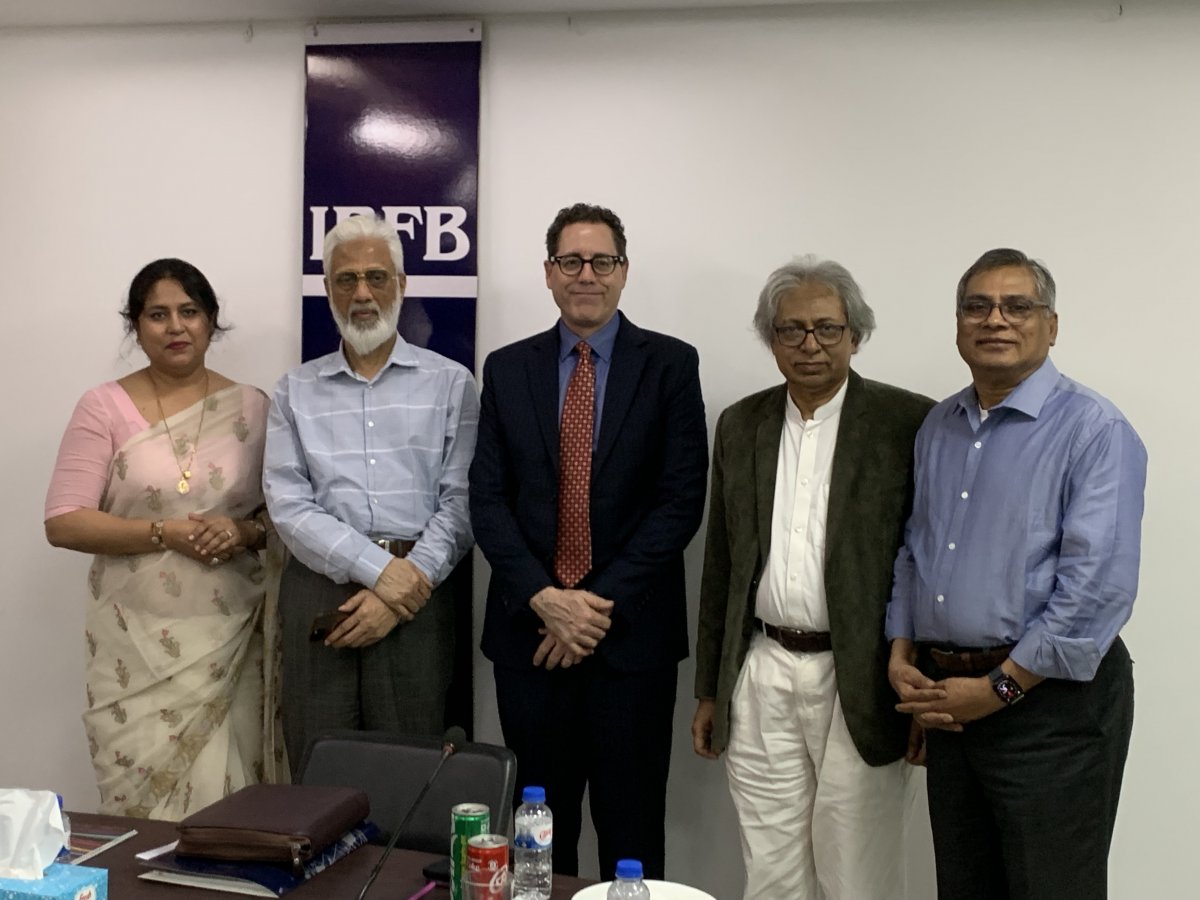
Dr. Mizanur Rahman Shelley – Chairman of CDRB,Professor Dr. Khondokar Bazlul Haque – Chairman of Agrani Bank Ltd., Khondokar Ibrahim Khaled – Chairman of Bangladesh Krishi Bank, Mr. Mahmudul Islam Chowdhury – IBFB President, Prof. Muzaffar Ahmed – former Chairman of TIB, Mr. Zahiduzzaman Faruque – senior Journalist, Mr. Riazuddin Ahmed – Editor of The News Today, Brig. Gen. M. Mofizur Rahman – Executive Director of IBFB participated as the panel discussants (from right to left). Dr. Iftekharuzzaman – Executive Director of TIB and Mr. Shawkat Hossain Massum – Business Editor of The Daily Prothom Alo were also present as panel discussants.
Mr. Khondoker Ibrahim Khaled, while reciting his Keynote Paper, pointed out the following visible areas and carriers of corruption in SCBs such as (i) inadequate measures of encouragement and punishment, (ii) lack of professional need-based flexibility of operation, (iii) lack of personal stake and non-accountability of nominated directors of the Board, (iv) undue interference of governmental, political and other influential persons (v) corrupt trade union leaders under political patronization, and (vi) career advancement hazards for honest professionals. He stated that SCBs in fact have developed as corruption breeding ground. In order to reduce corruption and improve transparency in the SCBs and ensure easy access to industrial credit, Mr. Khaled suggested a few points to be implemented with immediate effect, such as –
1) Revised compensation package for the top management (minimize huge disparity in compensation between the position of CEO and General Manager)
2) Tadbir Management Technique
3) Corruption Curbing Efforts e.g. breaking corruption chain through frequent transfer of loan processing and sanction officials, intelligence officials to be deputed in anti-corruption agencies, etc.
4) Trade Union Reforms
While speaking as the Chief Guest, Prof. Muzaffar Ahmed emphasized on strengthening the research unit for every bank to develop the banking sector. He suggested that the Board of Directors of SCBs should discuss the performance of respective banks with the media, depositors, clients, employees and borrowers after every two months. According to him, the Govt. should not influence or put pressure in writing off of any default loan, whereas any such decision should come through the Board of Directors as it relates to professional business decision rather than any political decision. To reduce corruption in banking sector, he suggested restructuring or introducing separate pay scales for the banking sector. He added that SCBs must rearrange their management structure policy.
Professor Dr. Khondokar Bazlul Haque, on the other hand, said that the business persons apart from the CBA activists and other factors mentioned in the keynote paper are also associated with corruption in industrial credit processing and sanctioning in the SCBs. He blamed the Government for the poor performance of SCBs as the Government takes loan but does not pay properly. He endorsed the political influences in credit sanctioning as a major means of corruption in the SCBs. Mr. Riazuddin Ahmed recites a crude reality that more than 90% of politicians are businessmen in the country. As such, enormous recommendations and pressures come from the government for sanctioning a loan and banks become bound to proceed with the loan, which is very unfortunate. He mentioned that banks are sanctioning the loan but not doing any feasibility study on the process. Mr. Shawkat Hossain Massum, on contrary, claimed that the industrial credits are invested in the capital market instead of being invested for industrial ventures. He also said that it is unfortunate that the defaulters in our society have strong social status. We do not have any exact data that how many bank defaulters we have in our country.
Mr. Mahmudul Islam Chowdhury, IBFB President, while presiding over the meeting claimed a very dismal picture of industrial credit sanctioning and disbursement in most of the cases. The situations of recovery and outstanding classified Industrial Term Loans in SCBs and Specialized Banks are disappointing. The procedural complexities and vicious circle associated with industrial credit are badly affecting the possibilities of industrial growth and economic development of the country.
The meeting ended with some General Recommendations to be pursued to the concerned authority of the Government as to improve transparency in the SCBs and ensure easy access to industrial credit. The recommendations put forward as follows:
- Industrial Credit processing be made time bound (from the existing practice requiring 70 days to be reduced to 30 days) and be made transparent through private sector participation for steps up to pre-CIB report collection stage.
- Banks must ensure strict compliance of provisions laid down in the Industrial Policy 2010 in respect of-
a) Collateral-free loan up to Tk. 7.5 Lac to SME entrepreneurs, especially women entrepreneurs.
b) A congenial policy to patronize import–substitute industries.
- Entrepreneurs should be imparted training so that they can acquire the required knowledge and skill to prepare credit proposals thereby reducing the dependence on bank officials.
- To expedite prompt sanction of Industrial Credit, sanctioning power up to certain limits should be delegated to field level executives, at least up to the General Manager level.
- Trade Union activities must be curtailed with the provision of only one union per bank. Installation of trade union office of any manner be prohibited within the bank premises. The CBA should work only at head office of banks. Labor Act may be revised to allow only one trade union in an organization.
- Introduce mandatory audit of each bank branch by external auditors every alternate year at the cost of the inspected bank.
- Equity participation for industrial credit should be in ratio of 70:30 (Bank: Borrower).